



Are You Leaving $100K–$1M+ on the Table by Ignoring Short-Term Rental Investing?
High-income executives, founders, and entrepreneurs are waking up to a hard truth.
You can earn $500K+ a year and still feel stuck financially.
Why? Because income alone does not create Legacy Wealth. Ownership does.
That is why more leaders are turning to short-term rental investing. Done right, it can create strong Airbnb cash flow, long-term appreciation, and powerful tax advantages. Many short-term rentals outperform traditional assets, especially when paired with smart tax optimization strategies.
But here is the problem.
Most high performers treat short-term rentals like a side project. They buy one property, outsource everything, and hope it works. In the process, they leave $6-figure tax savings and long-term wealth on the table.
This guide breaks down the 7 biggest mistakes and shows you how to fix them using a strategy built for executives.
Table of Contents
↳ Are You Leaving $100K–$1M+ on the Table by Ignoring Short-Term Rental Investing?
↳ Questions to Ask Yourself
↳ 1. Treating STRs as a hobby instead of a real business
↳ 2. Chasing properties instead of underwriting markets and regulations
↳ 3. Underestimating operating complexity and guest experience
↳ 4. Ignoring the STR tax strategy and REP opportunity
↳ 5. Over-leveraging without stress-testing downside scenarios
↳ 6. Focusing only on single doors instead of integrating multifamily and STRs
↳ 7. Optimizing for income today but not designing for Legacy Wealth tomorrow
↳ Optimizing STR Strategy & Building Legacy Wealth
↳ Key Takeaways
↳ FAQs
Questions to Ask Yourself
Before you dive into short-term rental investing, step back and get clear.
↳ What is your primary goal: cash flow today, tax optimization this year, or long-term Legacy Wealth?
↳ How much time can you realistically allocate to STR operations in the next 12 months?
↳ Are you working with a tax strategist who understands STR tax strategy and REP?
↳ What % of your net worth is in real estate investing vs stocks?
↳ Are you open to blending STRs with multifamily for better risk-adjusted returns?
1. Treating STRs as a Hobby Instead of a Real Business
Many executives approach short-term rental investing like a side hustle.
They buy a property, list it online, hire a basic manager, and expect passive income to flow. That worked in 2015. It does not work in 2026.
Today, the STR space is competitive and professional. Guests expect hotel-level experiences, fast communication, and premium design. If you treat your property like a hobby, your returns will reflect that.
Top operators think like business owners. They track performance metrics like occupancy, RevPAR, and net operating income. They test pricing strategies weekly and optimize listings like a marketing funnel.
If you want real Airbnb cash flow, you must build systems.
↳ Clear brand positioning
↳ Data-driven pricing strategy
↳ High-converting listing design
↳ Reliable operations and cleaning teams
Short-term rental investing is not passive. It is a real business that can produce passive income for executives when built correctly.
2. Chasing Properties Instead of Underwriting Markets and Regulations
Most investors fall in love with the wrong thing.
They chase a “cool property” in a trendy city instead of analyzing the market behind it. This is one of the fastest ways to lose money in short-term rental investing.
The best investors start with data.
They analyze demand drivers like tourism, healthcare hubs, and universities. They look at supply trends, seasonality, and average daily rates. They compare drive-to markets vs fly-to markets to understand demand stability.
Then they study regulations.
Cities across the U.S. are tightening STR rules. Some require permits. Others cap the number of rentals. Some ban them entirely in certain zones.
If you ignore regulations, you risk losing your entire income stream overnight.
Smart operators follow a simple order:
↳ Market first
↳ Neighborhood second
↳ Property last
This approach protects your capital and improves long-term returns in real estate investing.
3. Underestimating Operating Complexity and Guest Experience
Short-term rentals are operationally intensive.
Every booking requires communication, cleaning, maintenance, and review management. Unlike long-term rentals, you are running a hospitality business.
And small mistakes compound quickly.
A drop from 4.9 stars to 4.6 stars can reduce bookings and force you to lower prices. Over time, that can cost tens of thousands in lost Airbnb cash flow.
The solution is to build a premium experience.
↳ Professional interior design
↳ Seamless check-in systems
↳ Fast guest communication
↳ High-quality cleaning standards
↳ Local partnerships for experiences
Executives often try to outsource everything. That can work, but only if you hire specialized STR operators, not generic property managers.
If you want consistent returns, you must control the guest experience, even if you do not manage it daily.
4. Ignoring the STR Tax Strategy and REP Opportunity
This is where short-term rental investing becomes powerful.
There is a little-known STR tax loophole that allows investors to offset W-2 income using real estate losses. For high-income professionals, this can mean $50K–$300K+ in annual tax savings.
Here is how it works.
If your average guest stay is 7 days or less and you materially participate in the business, your losses may be treated as non-passive. That means they can offset active income.
This is different from traditional rental properties.
With long-term rentals, you usually need Real Estate Professional Status (REP) and 750+ hours to unlock full tax benefits. That is unrealistic for most executives.
But with STRs, you can access similar benefits without meeting REP requirements.
Add cost segregation, and the impact increases.
A $1M property could generate $200K–$300K in accelerated depreciation in year 1. That creates a large paper loss, even if the property produces strong cash flow.
This is tax optimization at its highest level.
But it only works if you plan correctly.
↳ Track material participation hours
↳ Work with a STR-savvy CPA
↳ Time acquisitions and renovations strategically
Without a strategy, you miss the biggest advantage of short-term rental investing.
5. Over-Leveraging Without Stress-Testing Downside Scenarios
Leverage can build wealth fast. It can also destroy it.
Short-term rentals often generate higher income than long-term rentals. But they also come with more volatility. Demand can drop. Regulations can change. Competition can increase.
Many investors underwrite deals using best-case scenarios.
They assume high occupancy, peak pricing, and stable regulations. That is dangerous.
Smart investors build conservative models.
They stress-test deals with lower occupancy and lower nightly rates. They plan for unexpected costs and regulatory shifts.
They also build reserves.
↳ 6–12 months of expenses
↳ Multiple booking platforms
↳ Strong insurance coverage
↳ Backup long-term rental strategy
Disciplined leverage protects your downside while still allowing upside.
This is how you build Legacy Wealth, not just short-term gains.
6. Focusing Only on Single Doors Instead of Integrating Multifamily and STRs
Many executives think they must choose between STRs and multifamily.
That is the wrong mindset.
Short-term rental investing offers higher potential returns and tax benefits. Multifamily provides stable income and scale. The real power comes from combining both.
Think of STRs as high-performance assets.
They generate strong Airbnb cash flow and unlock tax advantages. But they require more effort and carry more volatility.
Multifamily acts as the foundation.
It provides predictable income, professional management, and long-term appreciation.
A balanced portfolio might look like this:
↳ STRs for income and tax optimization
↳ Multifamily for stability and scale
↳ Select opportunities like Ranchland Apartments for passive growth
This hybrid strategy creates a more resilient path in real estate investing.
7. Optimizing for Income Today but Not Designing for Legacy Wealth Tomorrow
Many investors focus on short-term income.
They want an extra $5K–$10K per month. That is helpful, but it is not transformative.
Legacy Wealth requires a longer vision.
It is built over 10–20+ years through compounding.
Every STR you acquire builds equity. Every mortgage payment increases ownership. Every year of appreciation grows your net worth.
When you reinvest cash flow into new assets, growth accelerates.
Tax strategy plays a key role.
Instead of sending $200K+ to the IRS each year, you redirect it into new investments. Over time, that creates a portfolio worth $5M–$50M+.
But Legacy Wealth is not just about numbers.
It is about structure.
↳ Proper entity setup
↳ Estate planning
↳ Clear ownership structures
↳ Transferable systems
The goal is to build something that outlives your career.
Optimizing STR Strategy & Building Legacy Wealth
Short-term rental investing is not just about buying properties.
It is about building a system.
When you treat STRs like a business, choose the right markets, optimize operations, and apply tax strategy, the results can be powerful. You create income, reduce taxes, and build long-term equity at the same time.
When you combine STRs with multifamily, you reduce risk and increase scalability.
This is how high-income professionals move from earning well to building true Legacy Wealth.
At IILIFE, the focus is not just on investing. It is about designing a life that aligns wealth, health, relationships, and purpose. Through education, community, and curated opportunities, executives can build a portfolio that creates freedom and impact across generations.
Ranchland Apartments Class B Investment Opportunity
Ranchland Apartments represents a clear example of how Class B value-add multifamily investing can be executed with precision and upside.
This 204-unit community in Midland, TX is positioned in a high-growth, supply-constrained market with strong workforce housing demand, and offers a targeted business plan to increase occupancy from ~82% to market levels while capturing $100–$300 monthly rent premiums through a $1.5M renovation program.
With a projected 15%+ IRR, 1.5X–2X+ equity multiple, and a 6%–8% preferred return over a ~3-year hold, the opportunity combines in-place cash flow, forced appreciation, and a unique advantage through a 4.63% fixed-rate loan and insurance-funded new construction that adds value without additional investor capital.
For accredited investors seeking tax-efficient real estate exposure with institutional-quality execution, Ranchland stands out as a strategic way to participate in the current multifamily reset while building long-term Legacy Wealth.
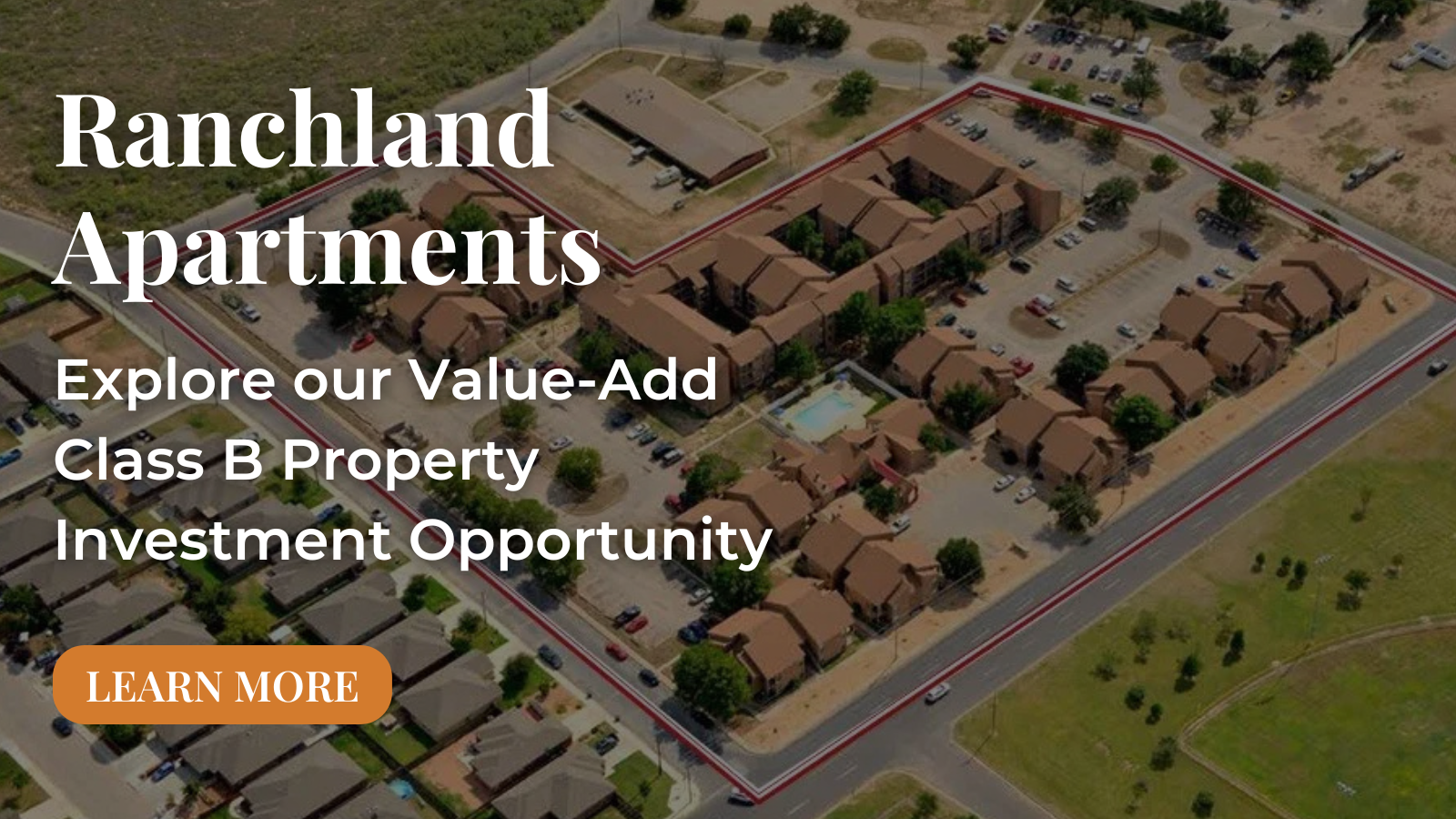
Explore the Ranchland Apartments opportunity and download the full Offering Memorandum here: https://iilife.live/ranchland
Ready to build Legacy Wealth?
📅 Book a free 1:1 Tax Strategy Call to start paying less tax in 2026 and map your path to a $5M+ portfolio https://tinyurl.com/legacy-wealth-call
📈 Stop paying $250K–$1M+ in taxes, redirect it into a $5M–$100M+ real estate and alternative investment portfolio: legacywealthaccelerator.com
Want more content like this?
Discover industry trends, actionable insights, cheat sheets, infographics, and more by following IILIFE founder and CEO, Ravi Katta, on LinkedIn: https://www.linkedin.com/in/rkatta/
Key Takeaways
↳ Short-term rental investing can generate higher income than traditional rentals but must be run like a real business
↳ STR tax strategy allows high-income earners to reduce W-2 income through smart tax optimization
↳ Market selection and regulation analysis matter more than the property itself
↳ Over-leveraging without conservative assumptions is one of the biggest risks
↳ Combining STRs with multifamily creates a more stable and scalable portfolio
↳ Legacy Wealth is built through long-term planning, not short-term income
FAQs
Are short-term rental investing opportunities still worth it in 2026?
Yes, but the strategy has evolved. Returns are still strong in the right markets, especially with data-driven underwriting and professional operations. Investors who treat STRs like businesses continue to outperform.
How does STR tax strategy work for high-income W-2 earners?
If average stays are 7 days or less and you materially participate, losses can offset active income. This creates significant tax savings when combined with cost segregation and proper planning.
Do I need Real Estate Professional Status (REP) to benefit from STRs?
No. Short-term rental investing has different rules. Many investors can access similar tax benefits without meeting the 750-hour REP requirement, making it more accessible for busy executives.
How does short-term rental investing compare to multifamily for passive income for executives?
STRs offer higher income potential but require more involvement. Multifamily provides stable, predictable returns with less operational effort. A combined approach balances both.
How many properties do I need to build meaningful Legacy Wealth?
It depends on deal size and strategy. Some investors build wealth with 2–5 high-performing assets, while others scale through multifamily. The key is consistent reinvestment and long-term planning.
Disclosures
Text to 669-699-7111 to start investing.
You can INVEST with your IRA/401k. Call or text to see if you qualify
This is not an offer; offers will be made only by means of the Regulation D Offering Documents, they may be updated or amended from time-to-time with the most recent Offering Circular or Offering Documents. The Regulation D offering under Rule 506(c) is for accredited investors only.
For general information on investing, we encourage you to refer to www.investor.gov.
The acquisition of any property identified in this communication is subject to various contingencies and may not be consummated. Past performance is not an indication of future results. Investing involves risk and may result in partial or total loss. Prospective investors should consider carefully investment objectives, risks, charges and expenses, and should consult with a tax, legal and/or financial adviser before making any investment decision.